27/02/2002
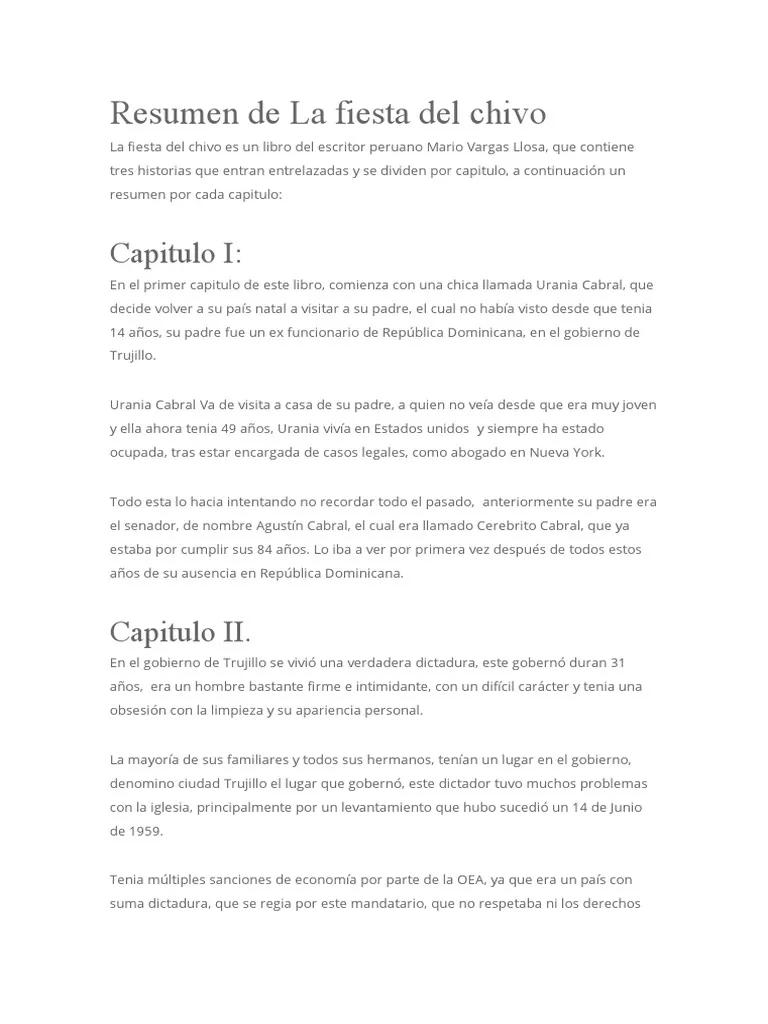
Mario Vargas Llosa La Fiesta del Chivois a gripping novel that delves into the dark heart of the Trujillo dictatorship in the Dominican Republic. More than just a historical account, it a masterful exploration of trauma, memory, and the lasting impact of political oppression. This detailed summary will unpack the novel complex narrative, key characters, and major themes.

Resumen de la Trama
The novel unfolds through three interconnected storylines, shifting between 1961 (the year of Trujillo assassination) and 199The first strand follows Urania Cabral, a successful New York lawyer who returns to the Dominican Republic after 35 years of self-imposed exile. Her return triggers a flood of memories, forcing her to confront the traumatic events of her past and her father complicity in the Trujillo regime.
The second storyline focuses on the conspirators plotting Trujillo assassination. We meet individuals driven by personal vendettas, witnessing their motivations and the risks they take in their attempt to overthrow the dictator. Their stories highlight the brutal realities of Trujillo reign and the far-reaching consequences of his actions.
The third strand offers a chilling glimpse into the mind of Rafael Leónidas Trujillo himself, nicknamed " El Chivo " (The Goat). Vargas Llosa masterfully portrays Trujillo aging body and failing health, contrasting his physical deterioration with the enduring power and cruelty of his regime. The novel explores his paranoia, his sexual depravity, and his ultimate downfall.
These narratives intertwine, culminating in a powerful climax that reveals the shocking truth behind Urania past and the tragic aftermath of the assassination attempt. The novel ending underscores the lasting legacy of Trujillo tyranny and the complexities of memory and reconciliation.

Personajes Principales
Urania Cabral
Urania is the central character, whose return to the Dominican Republic after decades of absence serves as the catalyst for the novel events. Her journey is one of confronting her past, particularly the trauma she suffered at the hands of Trujillo. Her experiences highlight the long-term effects of political violence and sexual abuse.
Rafael Leónidas Trujillo ("El Chivo")
Trujillo, the ruthless dictator, is a complex and terrifying figure. Vargas Llosa portrays him not only as a powerful tyrant but also as a man plagued by physical and psychological vulnerabilities. His actions, both political and personal, underscore the novel exploration of power, corruption, and the human capacity for cruelty.
Los Conspiradores
The novel features several key conspirators, each with their own motivations for wanting Trujillo dead. Their stories illustrate the diverse ways in which Trujillo regime affected the lives of ordinary Dominicans and the lengths they were willing to go to achieve freedom.
Agustín Cabral
Urania father, Agustín, was a high-ranking official in Trujillo regime. His character highlights the moral compromises individuals made to survive under the dictatorship, and the consequences of such choices on their families and personal lives. His role is vital in understanding the web of relationships that held Trujillo power in place.
Temas Principales
La Corrupción Política
The novel starkly portrays the pervasive corruption and brutality of Trujillo regime. It exposes the ways in which power was abused, dissent was crushed, and the lives of countless individuals were destroyed. The system of loyalty tests, the use of violence, and the sexual abuse perpetrated by Trujillo all demonstrate the extent of this corruption.
El Machismo
Machismo is a central theme, deeply embedded in the structure of Dominican society under Trujillo. The dictator unchecked sexual aggression and the public humiliation of his opponents highlight the interconnection of political and sexual power. The novel explores the ways in which machismo is used to control and oppress women, showcasing the devastating consequences of this patriarchal ideology.
La Memoria y el Olvido
Memory plays a crucial role in the narrative. Urania return to the Dominican Republic forces her to confront the memories she has suppressed for years, while the conspirators recall the events that led to their involvement in the assassination plot. The novel explores the complexities of memory, its power to both heal and wound, and the struggle to reconcile with a traumatic past. The contrast between Urania active remembering and her father passive forgetting is particularly poignant.
El Poder de la Escritura
Vargas Llosa uses the novel itself as a tool to confront the past. Through his writing, he seeks to ensure that the atrocities of Trujillo regime are not forgotten and that their impact on the Dominican Republic is acknowledged and understood. The act of writing becomes a form of resistance and a means of ensuring historical accountability.
Mezcla de Ficción y Realidad
La Fiesta del Chivoskillfully blends historical fact with fictional elements. While the assassination of Trujillo is a real event, and many of the conspirators are based on real individuals, Vargas Llosa takes creative liberties in developing the characters and their relationships. This blend of fact and fiction creates a compelling narrative that is both historically grounded and powerfully evocative.
Análisis de Personajes
| Personaje | Rol | Importancia Temática |
|---|---|---|
| Urania Cabral | Protagonista, testigo del régimen | Trauma, memoria, reconciliación |
| Rafael Trujillo | Dictador, figura central | Poder, corrupción, machismo |
| Conspiradores | Opositores al régimen | Resistencia, valentía, sacrificio |
| Agustín Cabral | Colaborador de Trujillo | Compromiso moral, consecuencias del pasado |
Conclusión
La Fiesta del Chivois a complex and multi-layered novel that offers a powerful exploration of the Trujillo dictatorship and its enduring legacy. Vargas Llosa masterful storytelling, his nuanced character development, and his profound exploration of memory and trauma make this a truly unforgettable reading experience. The novel serves as both a historical account and a deeply moving reflection on the human cost of political oppression.
Si quieres conocer otros artículos parecidos a La fiesta del chivo: resumen, análisis y temas principales puedes visitar la categoría Libros y Librerías.