
27/10/2013
Horacio Quiroga chilling tale, " La Gallina Degollda," stands as a masterpiece of Latin American horror literature. Its enduring power stems not only from its graphic depiction of violence but also from its exploration of themes of family, fate, and the unsettling nature of inherited trauma. This article delves into the story central themes, examining its literary influences and the lasting impact it has had on readers and critics alike.

De qué trata la gallina degollada : Una Tragedia Familiar
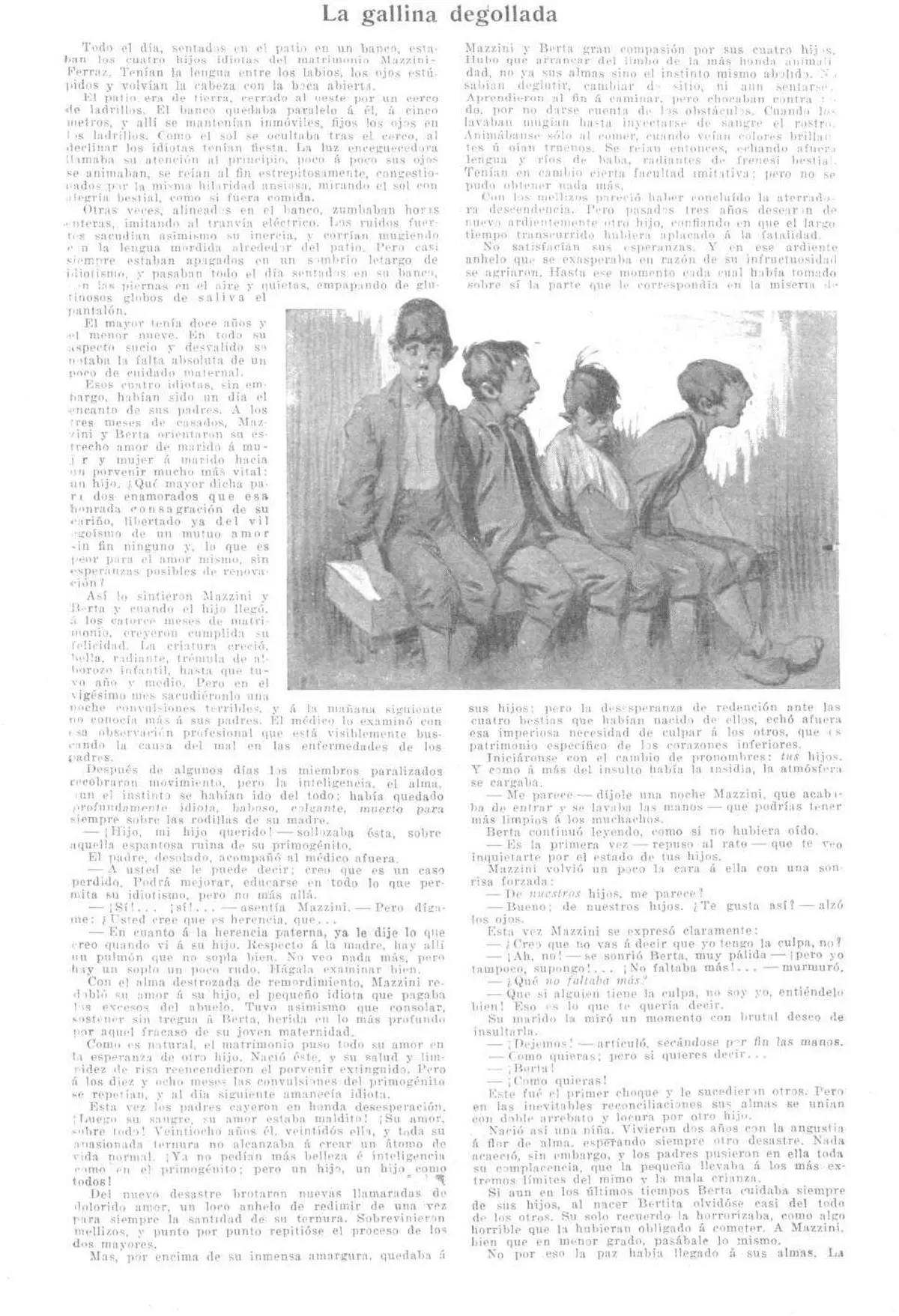
The story centers on the Mazzini-Ferraz family, cursed by a seemingly hereditary affliction. Their first four children, all boys, develop a debilitating condition around eighteen months of age, leaving them intellectually impaired and prone to disturbing acts of violence. The arrival of their fifth child, a girl named Bertita, brings a glimmer of hope—a healthy child in a family plagued by tragedy. However, this hope is short-lived.
The turning point arrives when the four boys witness the brutal slaughter of a hen by a servant. This seemingly innocuous event triggers a horrific act of imitation. Driven by their impaired minds, the brothers replicate the hen demise, selecting Bertita as their victim. The story culminates in the children chilling reenactment of the hen death, culminating in Bertita murder.
Comparación con "Los Idiotas" de Joseph Conrad
Many critics point to the influence of Joseph Conrad "The Idiots" on Quiroga writing. Both stories share striking similarities: the central focus on a young couple burdened by mentally deficient children, the devastating impact this has on the parents' relationship, and the resulting tragedy. While Conrad story emphasizes the parents' struggles and descent into madness, Quiroga focuses on the children actions and the horrifying consequences of their impaired minds.
The similarities don't end there. Both stories illustrate the oppressive atmosphere created by the parents' inability to cope with the reality of their children’s conditions. They highlight the isolation and social stigma associated with disability in the early 20th century. The societal pressures, the parents' psychological turmoil, and the children inability to navigate the world contribute to the overall sense of dread and despair.
Temas Centrales en La Gallina Degollda
Several key themes intertwine throughout " La Gallina Degollda," enriching its narrative depth and emotional impact:
- Horror and Terror: Quiroga masterfully blends psychological horror with graphic violence. The story doesn't shy away from depicting the gruesome act committed by the children, making the reader confront the disturbing reality of the situation. This graphic description, coupled with the build-up of suspense and anticipation, amplifies the overall effect of horror.
- Inherited Trauma: The story implicitly suggests a hereditary aspect to the children condition, adding a layer of tragic inevitability. The parents' guilt and their internal struggle with the possibility of passing on a debilitating condition contribute to the overall atmosphere of doom.
- Family Dynamics: The breakdown of the family unit is a central theme. The parents' inability to cope with the children’s condition strains their relationship, culminating in accusations of blame and mutual recrimination. The children actions further fracture the family, resulting in a complete disintegration of trust and affection.
- Nature vs. Nurture: The story leaves the question of the children condition somewhat ambiguous. Was it predetermined fate or a consequence of environmental factors? This ambiguity adds to the unsettling nature of the narrative, leaving the reader to ponder the complex interplay between genetics and upbringing.
- The Power of Observation and Imitation: The act of the children observing the hen slaughter and then imitating it highlights the power of observation and mimicry, particularly in young, impressionable minds. It also emphasizes the unsettling reality that even the most horrific acts can be learned and replicated.
Análisis del Horror en La Gallina Degollda
Quiroga depiction of horror is not gratuitous. It serves to highlight the psychological torment of the parents and the disturbing reality of the children condition. The gruesome details are not presented for shock value but to amplify the tragedy and the sense of helplessness that pervades the narrative. The graphic imagery reinforces the story themes, creating a lasting impression on the reader long after the story concludes.
The story power lies in its ability to make the reader confront uncomfortable truths about human nature, the fragility of life, and the devastating consequences of untreated mental illness. It challenges our understanding of family, morality, and the very nature of good and evil.
La Gallina Degollda : Legado y Adaptaciones
La Gallina Degollda remains a highly influential work in Latin American literature. Its chilling narrative continues to inspire adaptations and analyses, solidifying its status as a classic of the genre. The story impact transcends cultural boundaries, resonating with readers worldwide who are captivated by its haunting power and disturbing themes.
The story has been adapted into various forms, including a graphic novel by Carlos Trillo and Alberto Breccia. These adaptations demonstrate the enduring appeal of Quiroga work and its ability to inspire artistic interpretations across different media.
La Gallina Degollda is more than just a horror story; it a profound exploration of human nature, family dynamics, and the devastating consequences of inherited trauma. Quiroga masterful storytelling, combined with the story chilling imagery and unsettling themes, creates a lasting impact on the reader. The story enduring legacy speaks to its power to evoke a visceral response and to prompt reflection on some of life most difficult and unsettling realities. Its exploration of the intersection between inherited traits, family dysfunction, and societal expectations solidifies its place as a timeless classic of Latin American literature.
La Gallina Degollda invites readers to contemplate the complex interplay of nature and nurture, the fragility of life, and the unsettling nature of inherited trauma. It is a story that stays with the reader long after the final page is turned, prompting reflection and discussion on the themes it so powerfully presents.
Si quieres conocer otros artículos parecidos a La gallina degollda : un análisis del horror y la influencia literaria puedes visitar la categoría Libros y Librerías.