
16/03/2021
Victor Hugo Notre-Dame de Parisand Disney animated adaptation, The Hunchback of Notre Dame, share a title and protagonist but diverge significantly in plot, characterization, and thematic focus. This article delves into the key differences and similarities, exploring how each version interprets the source material and the messages conveyed.

Quasimodo: De Marginado a Héroe
In Hugo novel, Quasimodo is a tragic figure, profoundly isolated and scarred, his physical deformities reflecting a deeper societal rejection. While he experiences moments of kindness, particularly through his relationship with Esmeralda, his ultimate fate is one of profound loneliness and death. The novel emphasizes his inner goodness, his capacity for love, and the injustice of his treatment, but it doesn't offer a neat resolution. The Disney adaptation, however, transforms Quasimodo into a more archetypal hero, culminating in his acceptance by Parisian society. This alteration significantly softens the novel bleak ending and redefines Quasimodo journey, making him a symbol of overcoming prejudice.
Esmeralda: La Gitana Rebelde
Esmeralda, the vibrant gypsy dancer, is a pivotal figure in both versions. In Hugo work, she embodies defiance against societal norms and religious persecution. Her strength and independence challenge the patriarchal structures of 15th-century Paris, making her a complex and rebellious character. However, Disney’s Esmeralda, while retaining some of her spirit, is presented as a more conventional romantic heroine. Her role is diminished in terms of agency and depth, focusing more on her relationship with Quasimodo and Phoebus than her fierce opposition to societal oppression.
Frollo: El Antagonista
Judge Claude Frollo is a complex villain in both adaptations, but his motivations and actions are significantly altered. In Hugo novel, Frollo depravity is multifaceted, encompassing religious hypocrisy, lust, and a thirst for power. His internal conflict is explored in detail, making him a morally ambiguous yet compelling antagonist. Disney Frollo, although still a cruel and ambitious figure, lacks the same psychological depth. His lust for Esmeralda becomes the primary focus of his villainy, simplifying his character and diminishing the exploration of his internal torment.
Temas y Mensajes
| Aspecto | El Jorobado de Notre Dame (Hugo) | El Jorobado de Notre Dame (Disney) |
|---|---|---|
| Tema Principal | Justicia social, hipocresía religiosa, naturaleza del bien y el mal, el impacto de la fealdad física en la sociedad | Prejuicio, aceptación, encontrar la belleza interior, el poder del amor y el perdón |
| Final | Trágico, con la muerte de Esmeralda y Quasimodo, simbolizando la crueldad del entorno | Feliz, con la aceptación de Quasimodo y el triunfo del amor |
| Tratamiento del Personaje | Personajes complejos y multifacéticos, con debilidades y contradicciones | Personajes más estereotipados, con un enfoque en el bien contra el mal |
| Violencia | Muestra una violencia gráfica y explícita, reflejando la brutalidad de la época | La violencia es menos explícita, atenuada para una audiencia más joven |
Hugo novel explores complex themes of social justice, religious hypocrisy, and the nature of good and evil. It challenges the reader to confront the harsh realities of 15th-century Paris and the pervasive prejudice against the marginalized. Disney adaptation, while retaining some of these themes, prioritizes a message of acceptance and the power of love to overcome prejudice. It offers a more optimistic perspective, toning down the darker aspects of the source material.

El Rol de Notre Dame
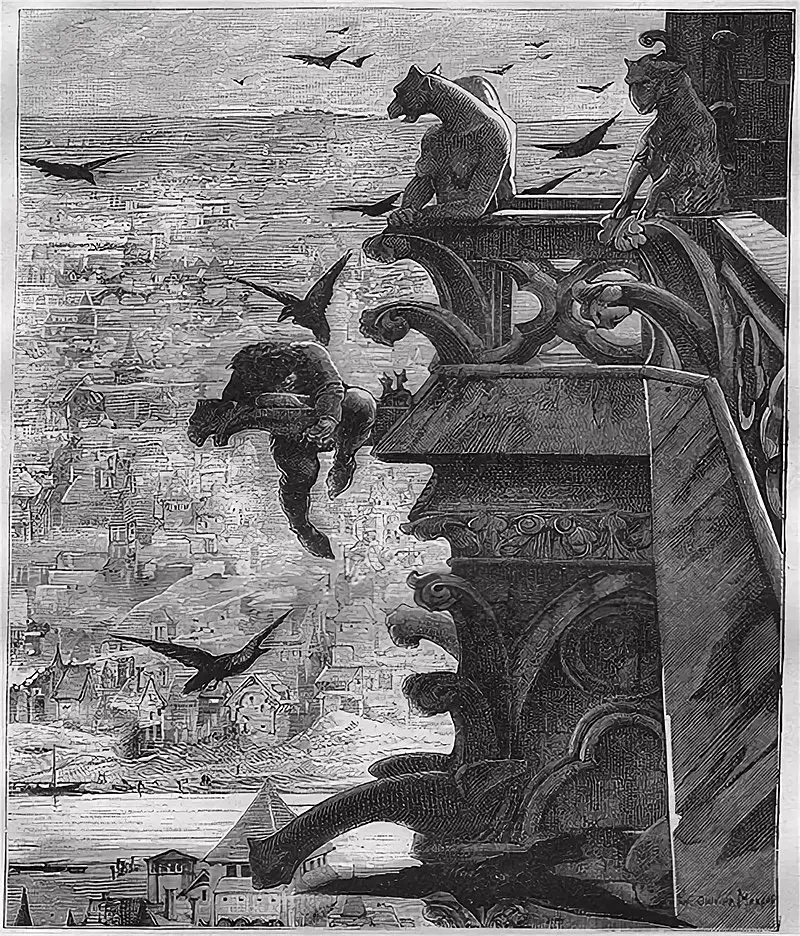
Notre Dame Cathedral serves as a powerful symbol in both versions. In Hugo novel, it a historical artifact, a backdrop for the unfolding drama, but also a microcosm of Parisian society, reflecting its beauty, its decay, and its inherent contradictions. Its significance is both architectural and symbolic. Disney employs the cathedral largely as a setting, although its gothic architecture is visually emphasized to highlight the story atmosphere. The emotional and symbolic weight of the cathedral is less explored in the animated version compared to the novel.
Consultas Habituales
- ¿Cómo difiere la trama del libro de la película? La película simplifica significativamente la trama de la novela, omitiendo varios personajes y subtramas importantes, y alterando el final para lograr un desenlace más optimista.
- ¿Cuáles son los personajes principales en cada versión? Tanto la película como el libro giran alrededor de Quasimodo, Esmeralda, y Frollo; sin embargo, la caracterización y los roles de estos personajes cambian drásticamente.
- ¿Cuál es el mensaje principal de cada versión? El libro explora temas de justicia social y la hipocresía religiosa, mientras que la película se centra en la aceptación y el triunfo del amor.
- ¿Es apropiada la película para niños? Si bien la película de Disney es apropiada para niños, es una adaptación considerablemente suavizada de la novela de Hugo, que contiene escenas de violencia y temas para adultos.
En conclusión, El Jorobado de Notre Dame, tanto en su versión novelística como cinematográfica, ofrece una historia cautivadora con personajes memorables. Sin embargo, las diferencias sustanciales en la trama, la caracterización y los temas centrales demuestran las libertades creativas tomadas en la adaptación, resultando en dos obras significativamente distintas que exploran diferentes facetas de la misma historia.
Si quieres conocer otros artículos parecidos a El jorobado de notre dame: comparación entre el libro y la película puedes visitar la categoría Libros y Librerías.